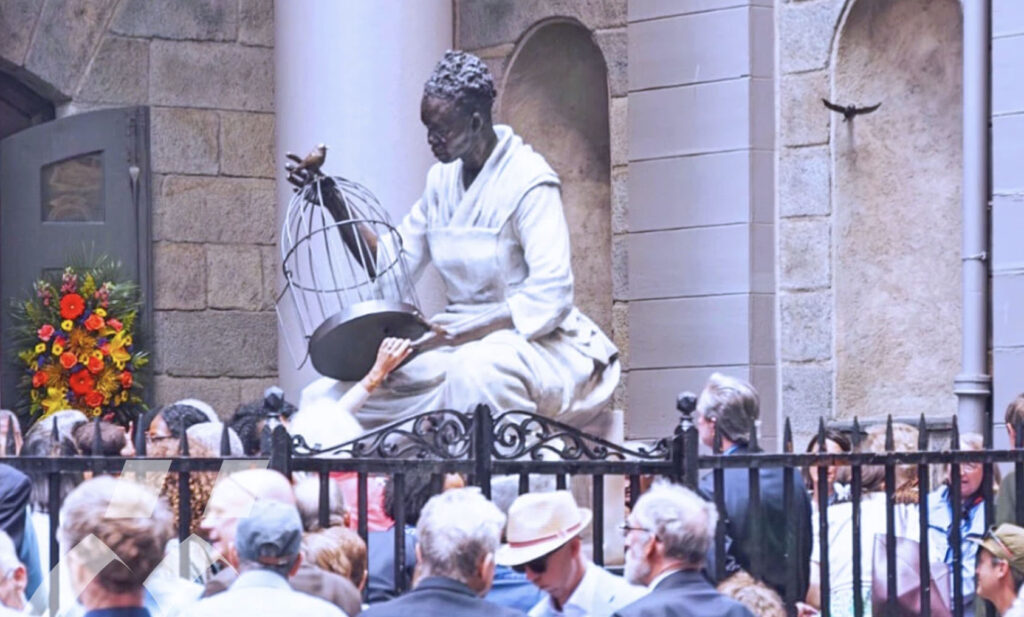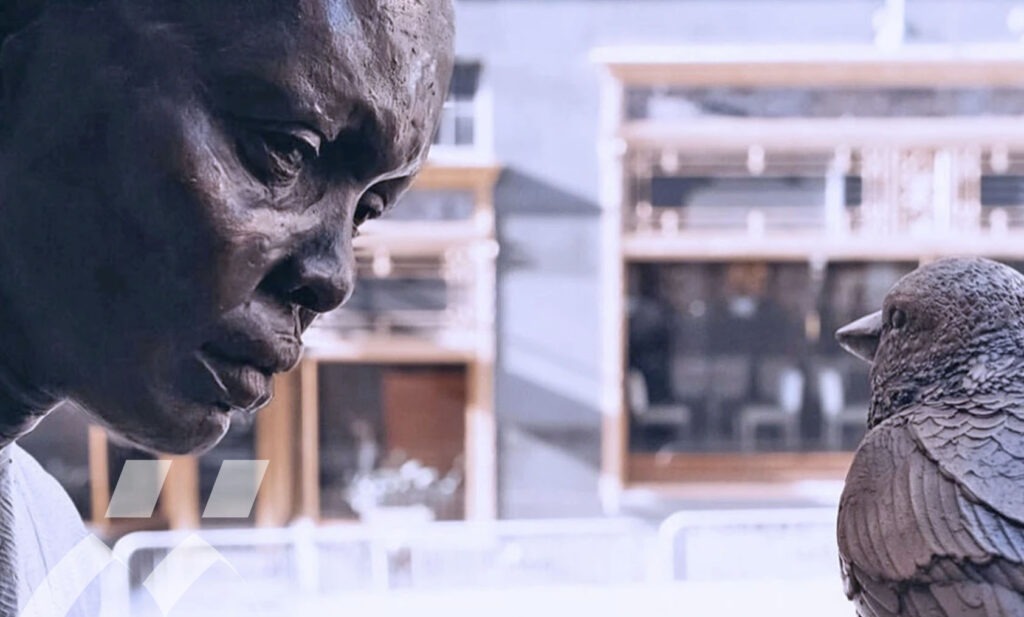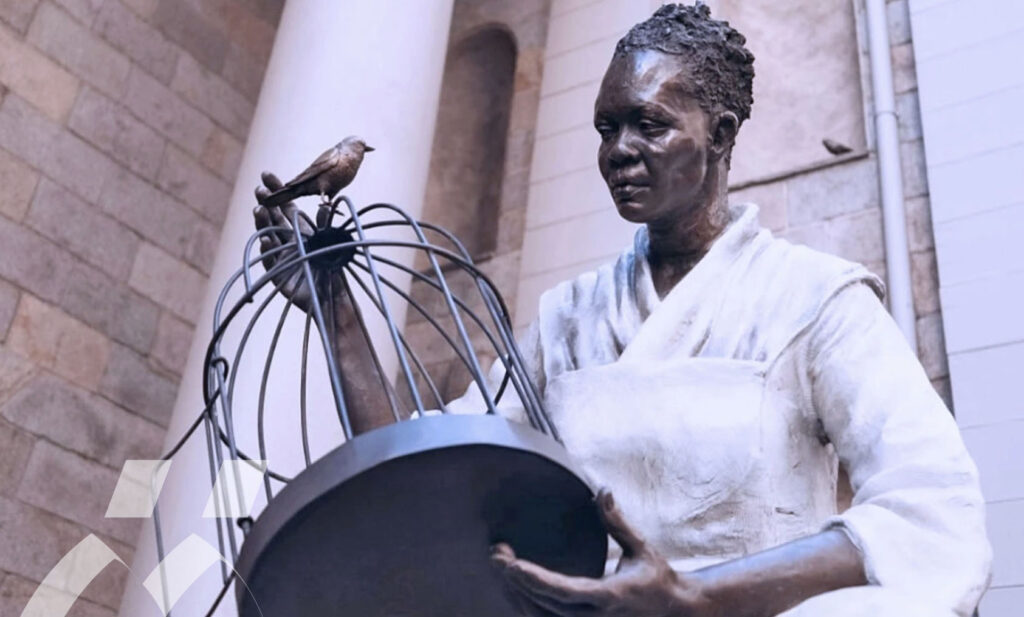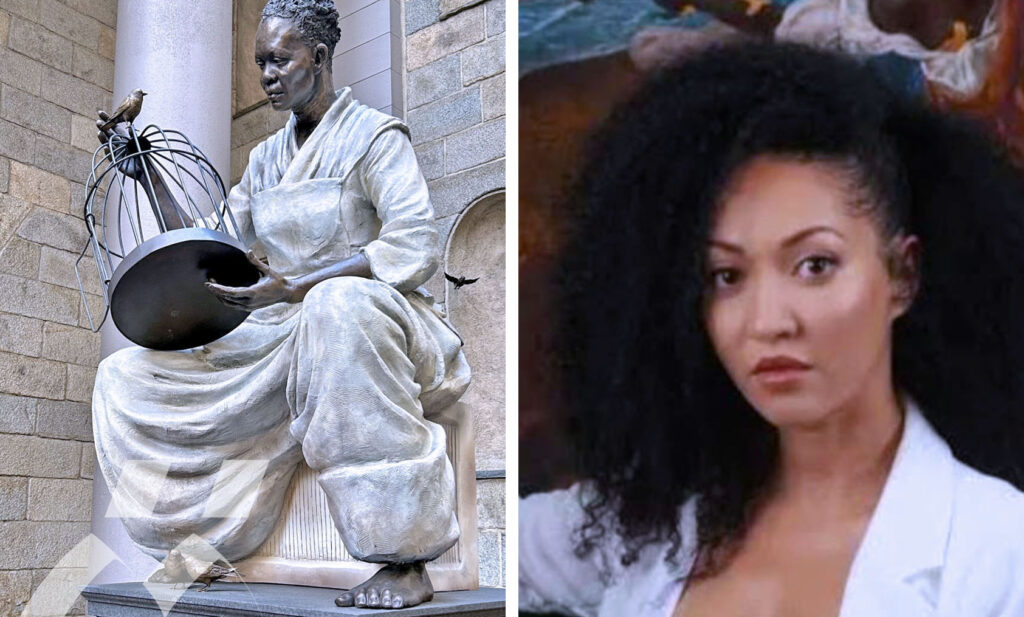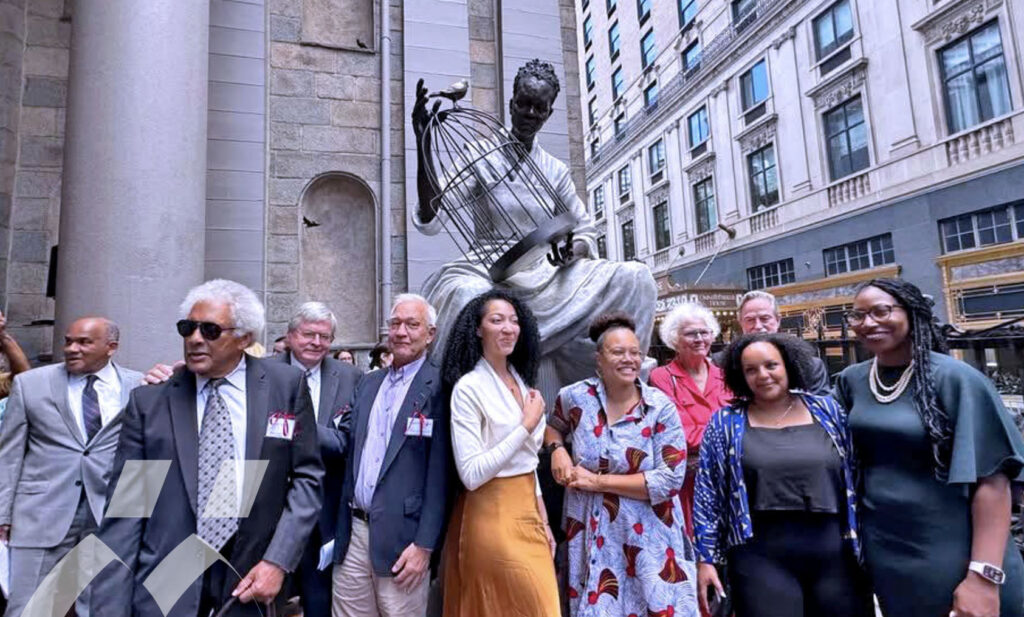
Boston, September 14, 2025 – At the heart of the Freedom Trail, a new artwork disrupts the usual reading of American history. In front of the King’s Chapel, at 58 Tremont Street, the monumental sculpture Unbound was unveiled this weekend during a moving ceremony, reminding that the quest for freedom, celebrated in Boston since 1776, was not shared by everyone.
A memory-laden inauguration
The ceremony brought together religious leaders, artists, activists and residents. The 219 known names of people enslaved by former ministers and members of the chapel were read one by one, breaking the long-held silence around this story. Songs, readings and moments of recollection accompanied the event, transforming the forecourt of the King’s Chapel into a space of living memory.
The work of the artist Harmonia Rosales
The work is signed by Harmonia Rosales, an artist recognized for her paintings and sculptures that reinterpret classical narratives under an Afro-Diasporic and feminine prism. With Unbound, Rosales wanted to represent both pain and resilience: “This play celebrates black women who, all over the world, continue to fight for true freedom,” she said. She collaborated with MASS Design Group and the restorative justice specialist Roeshana Moore-Evans, who ensured that the approach was carried out in consultation with local communities.
The historical paradox of the Freedom Trail
The Freedom Trail guides millions of visitors each year through iconic sites of the American Revolution, a symbol of national freedom. But as recalled by Unbound, the independence proclaimed in 1776 still excluded many people – especially enslaved Africans, women and indigenous peoples. The King’s Chapel, built in the 18th century, itself frequented by slavers, embodies this paradox: a place of worship preaching spiritual freedom while profiting materially from enslavement.
A contemporary impact
In a context where debates about memory, reparation and racial justice remain hot in the US, Unbound acts as a mirror for Boston and beyond. She invites us to work on introspection: recognize past injustices in order to better face current inequalities. For many visitors and Bostonians, this permanent tribute transforms a tourist site into a place of critical reflection on history and the persistence of struggles for equality.
By making visible lives long erased, the sculpture becomes more than a monument: a call for continuous education, community dialogue and racial healing. She permanently inscribes the contribution of black women to freedom and justice in the historical landscape of Boston – and recalls that the path towards true freedom remains, even today, unfinished.