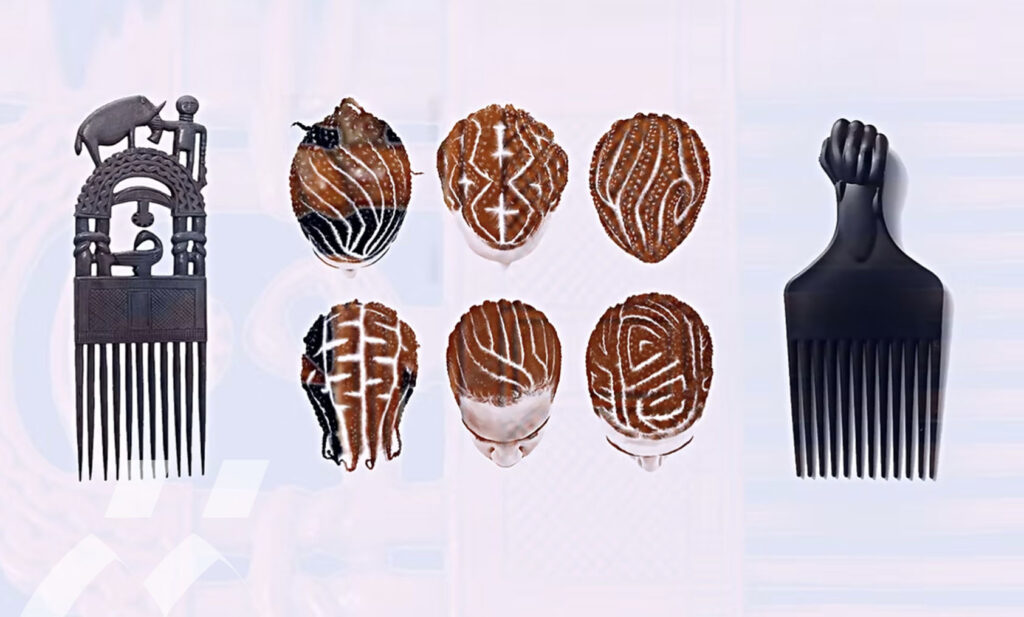
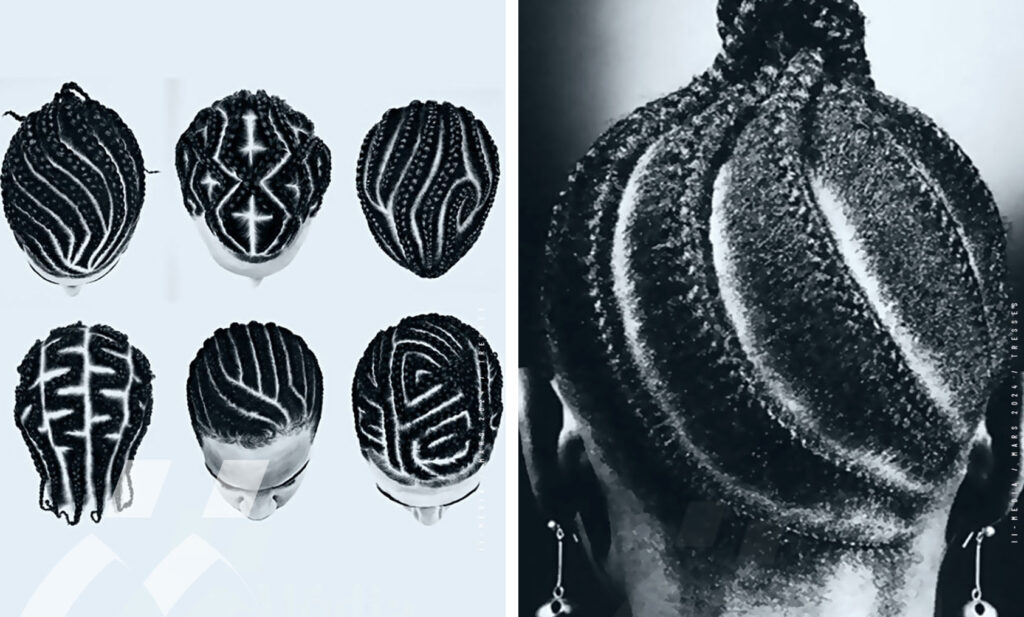
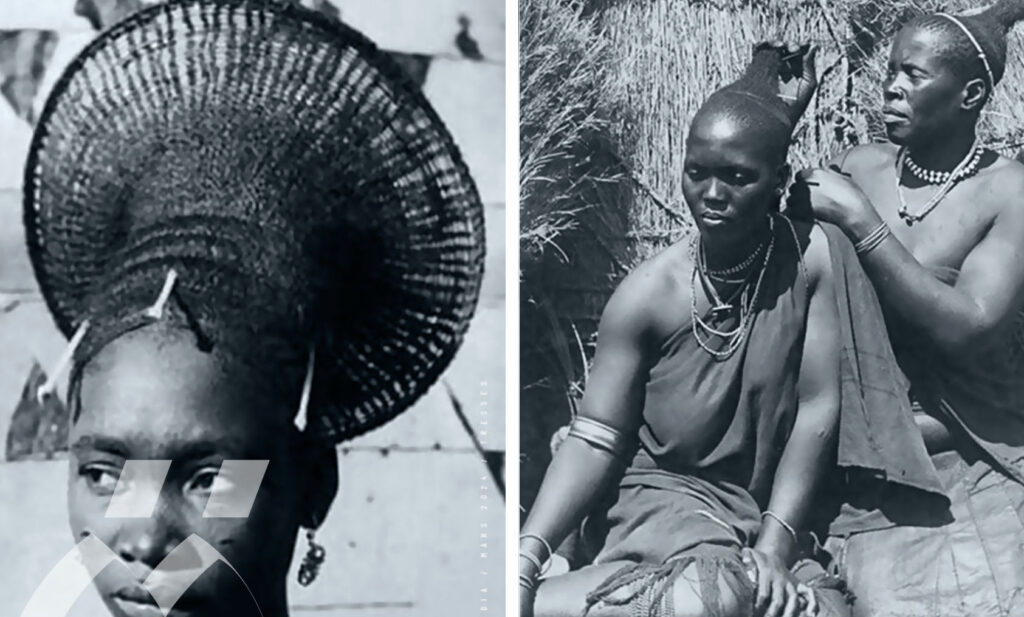
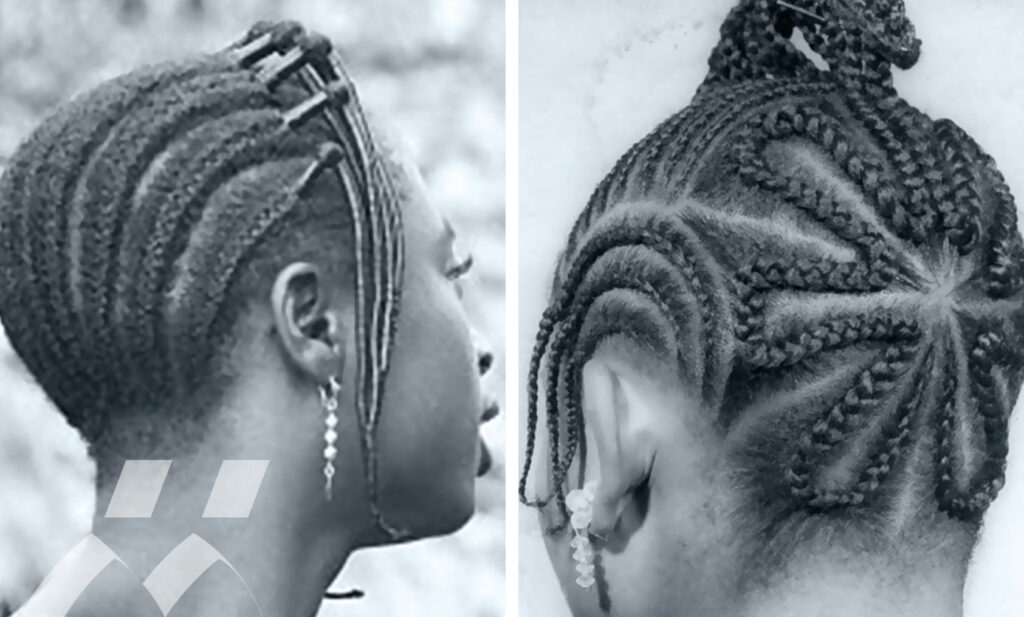
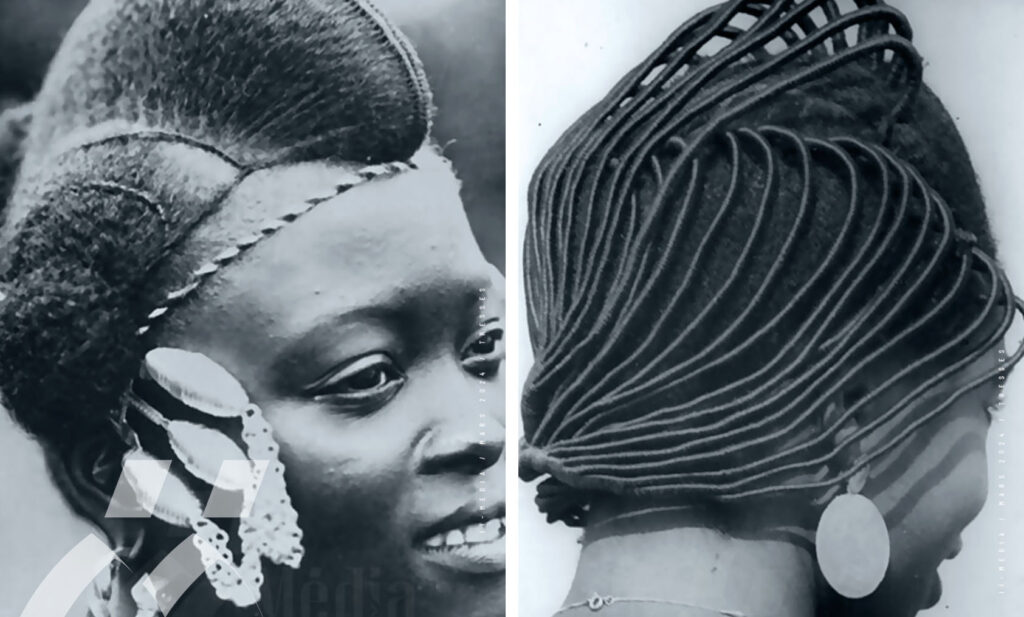
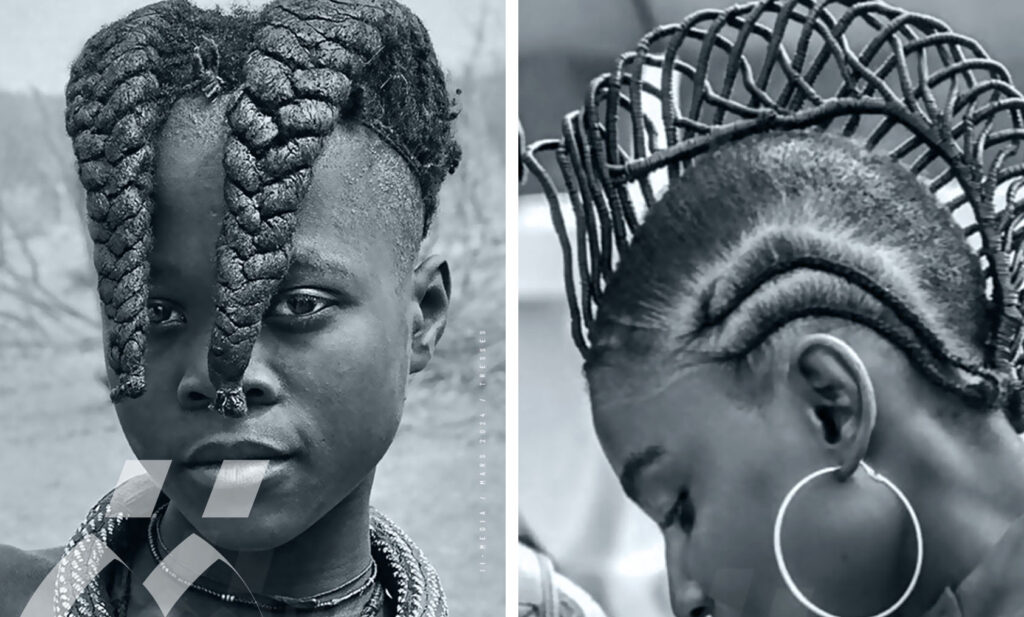
The history of African braids dates back thousands of years and is deeply rooted in African culture. Braids were used as a means of communication, social status, religion and lifestyle. Here is an overview of the history of African braids :
- Cultural significance : Braids have always been much more than just a hairstyle for African peoples. They have often been used to express age, social status, ethnic origin, religion, marital status and even tribal identity.
- Hair protection : In many African cultures, braids were a way to protect hair from harsh natural elements such as the scorching sun, dry wind and desert sand.
- Rites of passage : In some African cultures, braids were associated with rites of passage, marking important transitions in life, such as adolescence or marriage.
- Religious and spiritual symbols : Braids were also associated with religious and spiritual practices in many African cultures. For example, braids could be used to honor ancestors or as a means of spiritual connection.
- Slavery and the African Diaspora : During the period of slavery and the African diaspora, braids continued to play an important role. Slaves often used braids as a means of coded communication, transmitting secret messages through the patterns and styles of braids. For example, to signal that they wanted to escape, the women braid a hairstyle called « departes ». They were thick and tight braids, braided near the scalp and tied in rolls on top. And another style had curved braids, tightly woven on the head. The curved braids would represent the roads they [used to] escape. In the braids, they also kept gold and hid seeds that, in the long term, helped them survive after their escape. They would also use seeds as a decoration in the hair, to plant them later and meet their dietary needs in their new destinations.
- Renaissance of braids : Over the past few decades, there has been a renaissance of African braids, with many people rediscovering and celebrating traditional styles. Braids have become a form of artistic expression and a symbol of cultural pride for many people of African descent around the world.
In summary, African braids have a rich and complex history, going far beyond their simple aesthetic function. They are deeply linked to the cultural, social and spiritual identity of African peoples and continue to play an important role in the African community and beyond.
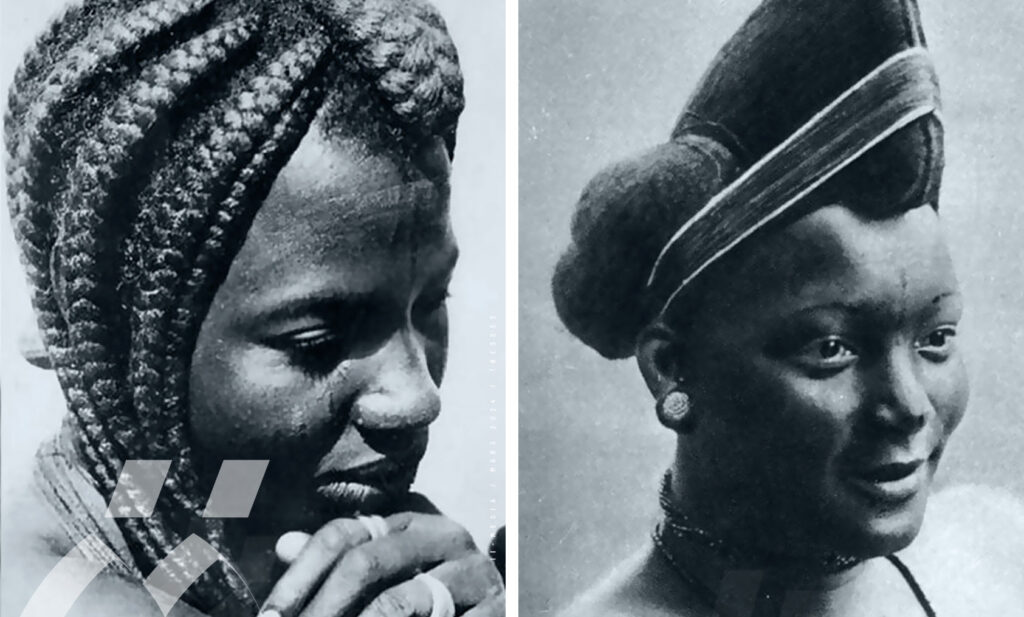
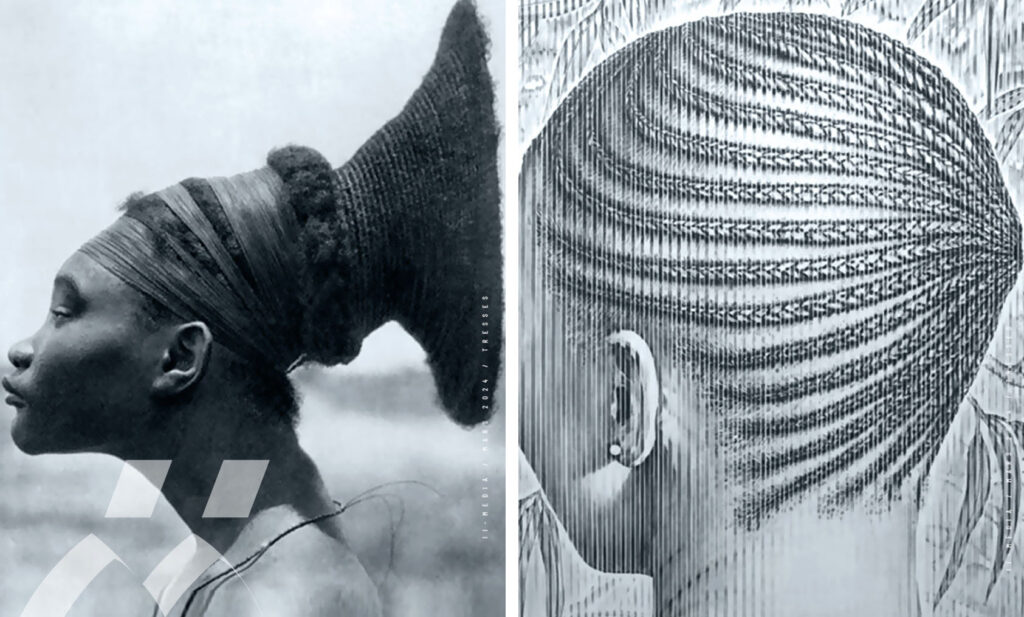
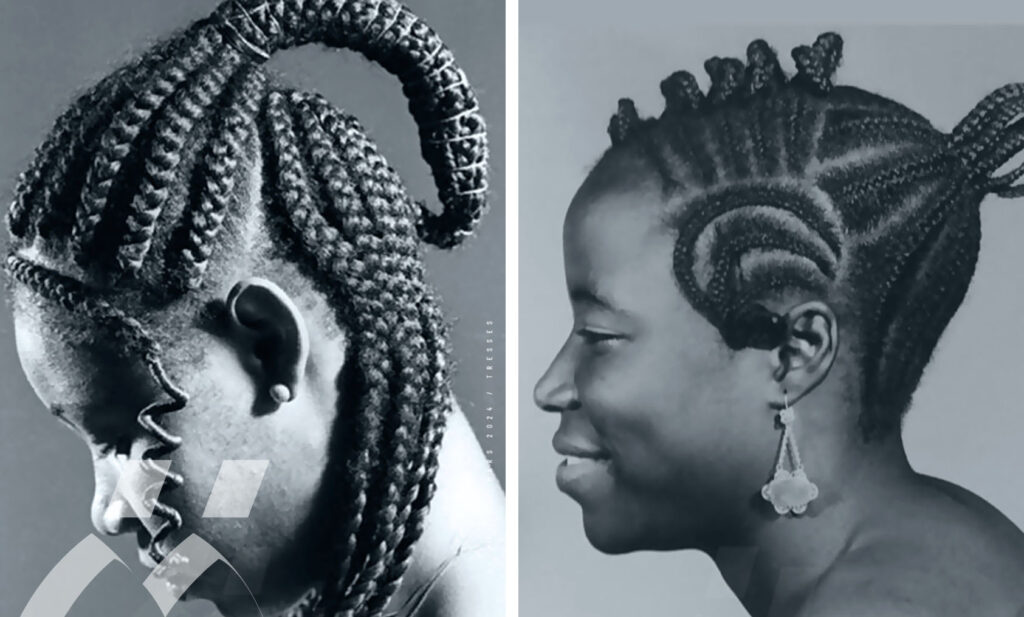
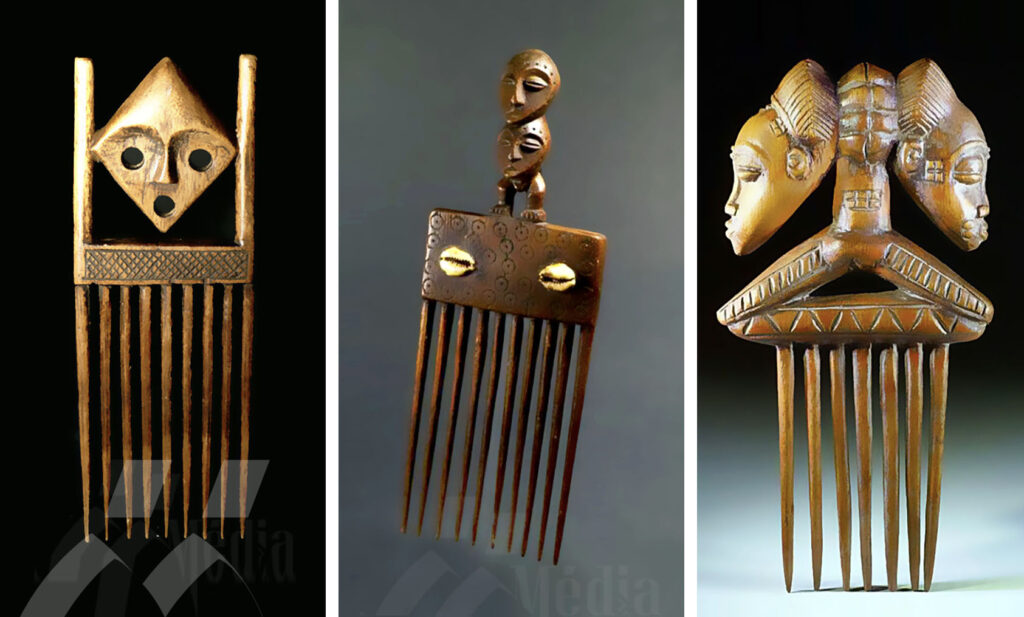
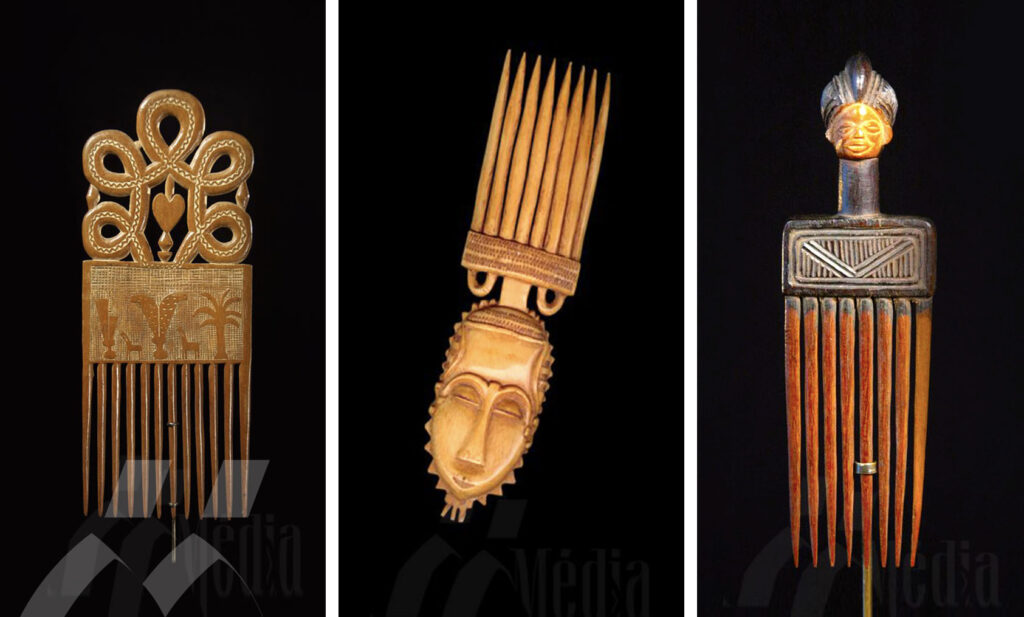
We cannot talk about braids without mentioning the ‘afro comb’
Les tresses, le peigne africain et le « peigne afro » sont indissociables, tant ils incarnent une symbolique culturelle et politique profonde.
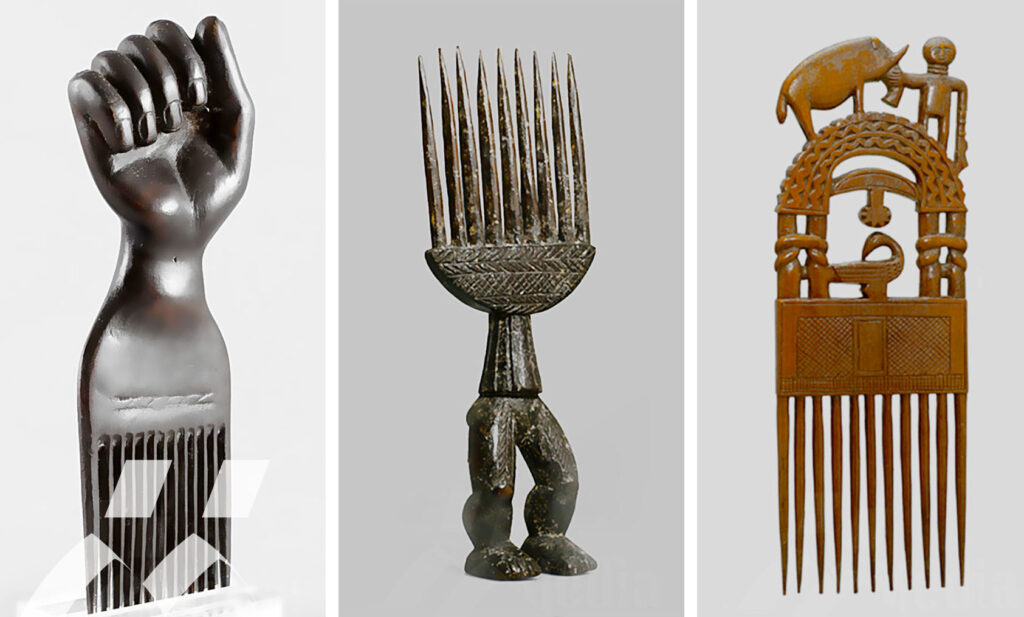
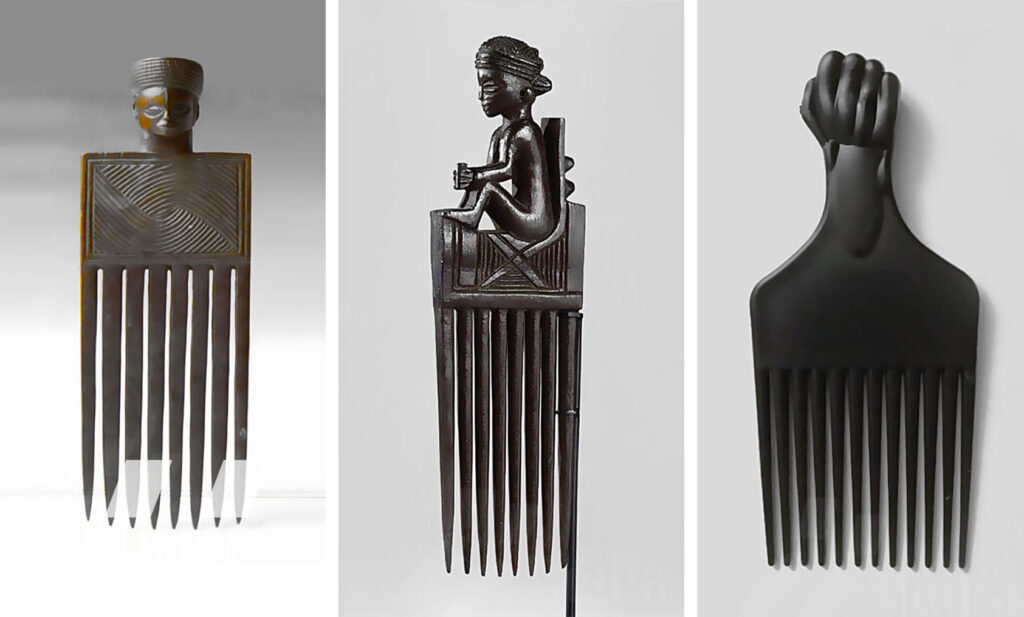
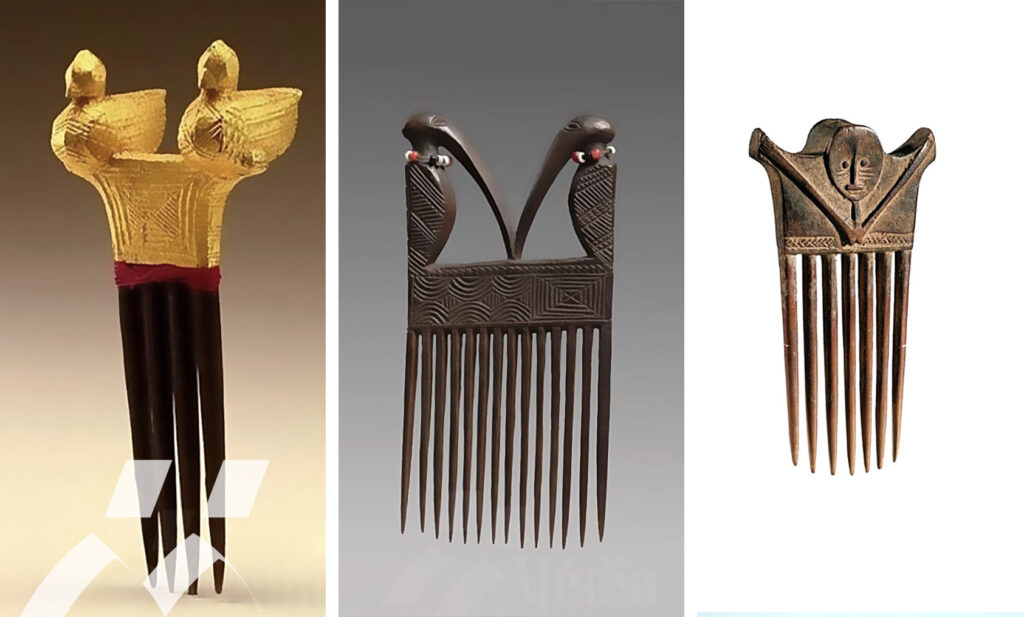
Just like braids, the African comb has a deep and diverse history, having played an important role in the cultural, social, and ritual practices of African peoples throughout the ages. He embodies both the practical functionality and cultural symbolism of hairdressing in Africa.
During the 20th century, the Afro comb took on particular importance, becoming an emblem of the cultural and political movement. You have surely already seen this comb with a black fist, symbol of the Black Power salute popularized by the Black Panthers in the United States. Designed in 1972 by Anthony R. Roman, this object symbolizes much more than a simple hairdressing accessory. At that time, many black women decided to adopt their hair natural, rejecting the traditional “white” beauty standards.
Originally referred to as the “wide-toothed comb”, the “Afro comb” has its roots in the ancestral history of African combs, intimately linked to the dark chapters of the transatlantic slave trade and slavery. During this period, African slaves were forced to cut their hair for health reasons on board slave ships. But once they arrived on American soil, they started to grow their hair, experimenting with different hairstyles to assert their cultural identity and resistance to oppression.
Within African-American culture, the “Afro comb” has quickly become an essential tool. Not only did it serve to untangle curly hair, but it also allowed for the creation of voluminous and textured hairstyles, thus celebrating the natural beauty of Afro hair. Symbol of ethnic pride and resilience in the face of racial discrimination and Eurocentric standards of beauty, the Afro comb embodies cultural heritage and the fight for equality.
Nowadays, the Afro comb retains all its symbolism within the Afro-descendant community. It remains an essential tool for maintaining and styling a multitude of hair textures, ranging from curls to frizzy. Beyond its practical utility, it represents the acceptance of the diversity of hair textures and celebrates natural beauty around the world.
En savoir plus :
https://topafro.com
www.agoraafricaine.info